
Mini Split Ceiling Cassette vs. Wall Mount

Table of Contents
You don’t need to deal with the hassle and cost of installing a traditional HVAC system with ducts to heat and cool your home. Mini split systems, including ceiling cassettes and wall-mounted units, provide energy-efficient heating and cooling without the need for ductwork.
But which mini split option is right for you? Use this guide to compare the ceiling cassette vs. wall mount mini split options, based on key factors that include design, airflow, and installation.
What Is a Wall-Mounted Mini Split?
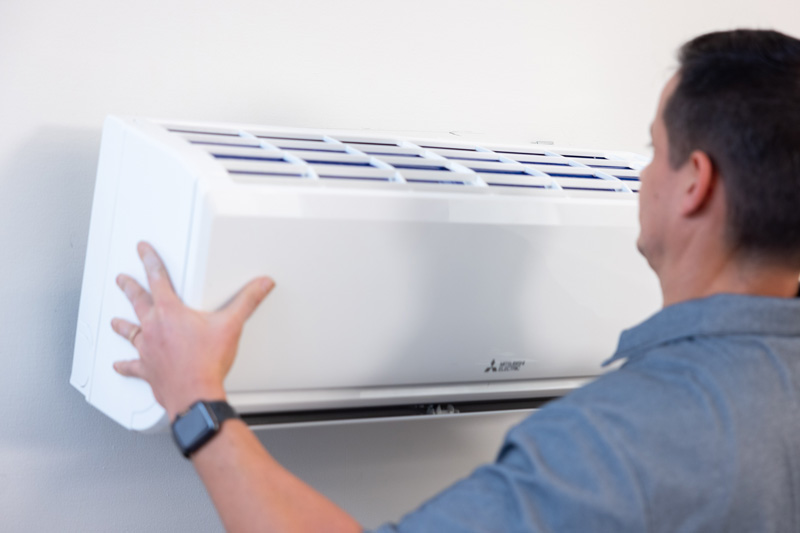
Wall-mounted mini splits are temperature control systems that provide targeted heating and cooling wherever they are installed. As the name suggests, wall-mounted mini splits are installed on the wall, typically near the ceiling, to ensure better air flow. They push hot or cool air out in one direction, which then disperses through the room. The wall needs to be tall enough that there won’t be anything obstructing the air flow.
These units are widely available and relatively easy to put in place. They don’t even need to be installed on exterior walls, though that is often the more affordable option. Wall-mounted mini split units are ductless. All they require for installation is approximately a 3-inch hole in the wall to connect to the refrigerant lines, connecting wire, and a drain tube.
Wall-mounted mini splits do noticeably stick out from the wall, so keep your aesthetic preferences in mind when selecting a ductless temperature system.
What Is a Ceiling Cassette Mini Split?
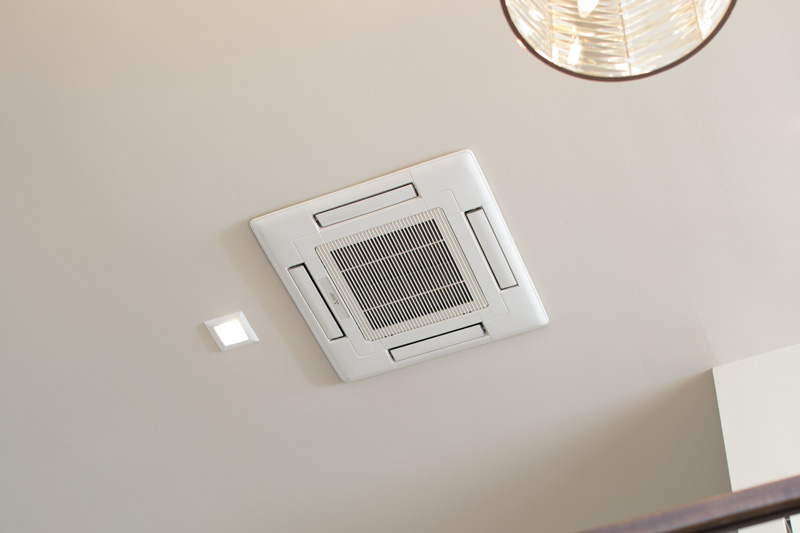
Like wall-mounted mini splits, ceiling cassette mini splits are ductless temperature control units that can efficiently heat and cool most rooms in your home. They are not installed on the wall, though. Instead, they’re mounted flush against the ceiling, typically in the middle of the room, making them discreet and less obtrusive than wall-mounted units. You don’t have to give up any valuable wall space.
Since they’re on the ceiling, these units can also push air out in four directions rather than just one. This four-way airflow means that you get more consistent, even temperature control. It also makes ceiling cassette mini splits ideal for large spaces like great rooms and open floor plans.
Ceiling cassette mini splits connect to an outdoor unit through refrigerant lines and connecting wires. Though they’re ductless, they could easily be mistaken for air vents connected to a traditional ducted HVAC system.
Key Differences Between Ceiling Cassettes and Wall Mounts
Airflow and Coverage
Ceiling cassettes achieve better, more uniform airflow and coverage than wall mount units because they move air in four directions rather than just one.
Installation Requirements
Installation can be more complicated on ceiling cassettes since their supply lines must run through attic space1. With wall mounts, you only need to make a small hole in the wall to access the supply lines, leading to a faster, cheaper installation process.
Room Aesthetics
Wall mounts are more obvious and may disrupt the design flow of the room where they’re installed. Ceiling cassettes, by contrast, are very discreet and easily blend into the ceiling.
Maintenance and accessibility: It’s easier to access wall-mounted units for any maintenance needs. With ceiling cassettes, maintenance may be more complicated since they’re less accessible on the ceiling.
Cost Considerations
Due to the more complicated installation, ceiling cassettes are generally more expensive than wall mounts2.
Considerations for Each System
Before you decide between the mini split cassette vs. wall mount ductless temperature control systems, consider your main priorities. Both systems have their advantages and drawbacks, so there’s no wrong answer—just what works best for you.
Wall Mount Pros: Easy install, lower cost, simple maintenance
Wall-mounted units from brands like Mitsubishi Electric are some of the most popular HVAC systems, and for good reason. They’re easy to install and maintain, leading to cost savings. If you’re looking to get your new temperature control system up and running quickly and affordably, a wall-mounted mini split is probably the best choice.
Ceiling Cassette Pros: Better air distribution, hidden design, quieter operation
Ceiling cassettes offer greater aesthetic appeal. They blend right into the ceiling, so you may not even notice them after a while. These units also offer the advantage of four-way air flow, which creates better, more efficient air distribution. While wall-mounted mini splits are generally very quiet, ceiling cassettes operate even quieter.
The tradeoff for these advantages is that ceiling cassettes are typically more expensive than wall mount options, both in terms of installation and maintenance2.
Which Mini Split Is Right for You?
If you’re still stuck choosing between the ceiling cassette vs. wall-mount mini split approaches to temperature control, weigh these considerations:
- Best for small rooms: Wall-mounted
- Best for low ceiling: Ceiling cassette
- Best for open layouts: Ceiling cassette
- Best for a tight budget: Wall-mounted
- Best for aesthetic design choices: Ceiling cassette
Professional Installation Matters
You can purchase a mini split from your local home improvement retailer, but the best approach for HVAC installation is always working with qualified professionals. Professionals like the team at Ridgeline Heating and Cooling have the experience and knowledge necessary to safely and precisely install your new mini split unit.
Proper installation is key to ensuring your unit works efficiently. That way, you can sit back and enjoy the comfort provided by your new mini split temperature control unit.
If you’re in the Albany County, New York, area, there’s no better team to install your Mitsubishi Electric mini split than Ridgeline Heating and Cooling. All of our team members have rigorous training in Mitsubishi Electric ductless systems to ensure precise, stress-free installation. Request your mini split estimate today to get started.
FAQ
Is a wall mount or a ceiling cassette better for a small room?
Both wall mounts and ceiling cassettes will offer effective temperature control in a small room, but ceiling cassettes are better suited to larger spaces.
Are wall-mounted mini splits noisy?
Wall-mounted mini splits are generally much quieter than traditional AC units.
Are wall-mounted ceiling cassettes noisy?
Like wall-mounted mini splits, ceiling cassettes are quiet.
Are wall mounts more expensive than ceiling cassette units?
No, generally ceiling cassette units are more expensive than wall mounts due to the more complicated installation process2.
Can I install a wall mount or ceiling cassette by myself?
While it may be possible to install a mini split system yourself, it’s best to leave installation to the professionals. They have the training and expertise to install your new system precisely so it’s ready to efficiently heat and cool your home for years to come.
Sources
- Duchev, M. (5 July 2023). Mini Split Ceiling Cassette vs Wall Mount – Which One is Worth the Investment? Go Ductless. Retrieved December 15, 2025, from https://gotductless.com/blogs/comparisons/mini-split-ceiling-cassette-vs-mini-split-wall-mount-which-one-is-worth-the-investment
- McCabe, L. and McDevitt, C. (29 October 2025). How much does a mini-split cost in 2025? Energysage. Retrieved December 15, 2025, from https://www.energysage.com/heat-pumps/how-much-does-a-mini-split-cost/#what-impacts-ductless-mini-split-costs