
Benefits of a Mitsubishi Electric Cold Climate Heat Pump
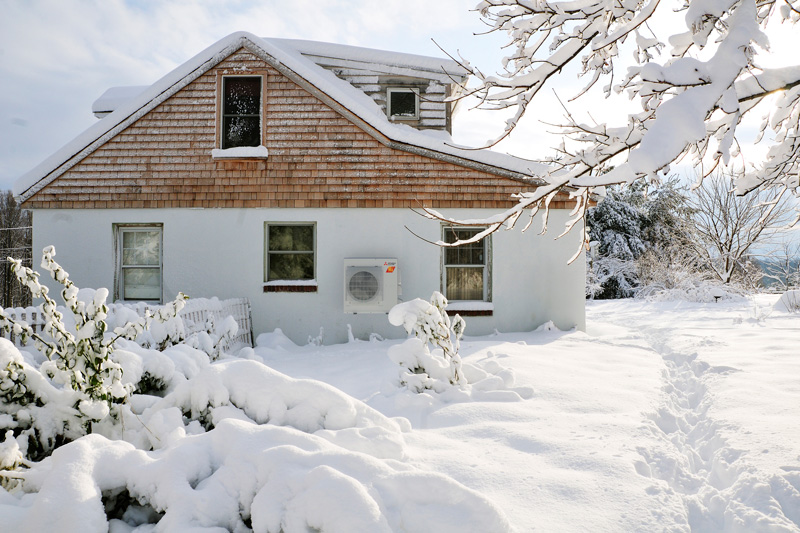
Table of Contents
When the temperatures drop in the Albany, NY, area, knowing you have a toasty warm home to return to after shoveling the driveway or battling the biting wind is a comfort you don’t want to take for granted. The last thing you want in winter is faulty heating. Mitsubishi Electric cold climate heat pumps hold up even in the harshest weather, keeping you and your family comfortable.
There’s a misconception that heat pumps don’t work well in extreme cold. Mitsubishi’s Hyper-Heating INVERTER® (H2i®) technology debunks that myth, delivering reliable warmth even when outdoor temperatures plunge well below zero. Discover the benefits below.
What Is a Cold Climate Heat Pump?
Heat pumps rely on refrigerants to move heat. An outdoor unit absorbs heat from outdoor air with refrigerant and then transfers that heat indoors1. This makes heat pumps an environmentally friendly and cost-efficient alternative to electric baseboard heaters or furnaces that burn fossil fuels.
Mitsubishi cold weather heat pumps can reduce energy consumption, lower utility bills, and keep your home consistently warm. In fact, today’s variable-capacity heat pumps consistently outperform conventional alternatives1.
How Mitsubishi Electric Heat Pumps Excel in Cold Weather
Old heat pump technologies sometimes struggled due to decreases in pressure and refrigerant flow rate, which interfered with operational capacity. The new variable-capacity Mitsubishi cold weather heat pumps with hyper-heating inverter (H2i® or H2i® plus technology) solve this problem, allowing for consistent pressure and higher compressor speeds, even in cold climates1.
The key is the inverter-driven compressors, which adjust their speed depending on demand. As a result, the system can run continuously at a lower power level. This helps preserve the equipment while also saving energy, similar to how cars that maintain a consistent speed on the highway use less fuel than those stuck in stop-and-go traffic on packed city streets2.
Key Benefits of Mitsubishi Electric Cold Climate Heat Pumps
Mitsubishi cold climate heat pumps deliver advantages that go beyond keeping you warm. Key benefits include the following:
- Consistent heating: With the new hyper-heating inverter technology, Mitsubishi’s cold climate heat pumps are able to ensure consistent performance, even in freezing temperatures. The advanced heat pump technology produces 100% heating capacity down to -5° Fahrenheit3.
- Lower costs: Mitsubishi’s inverter-driven compressor adapts its speed according to demand. This allows for continuous operation at lower energy levels, meaning steady heating and reduced utility costs.
- Environmentally friendly: Previously, homeowners in cold climates had to rely on fossil-fuel-burning furnaces or electric baseboard heaters. This is expensive and, in the case of fossil fuels, environmentally damaging. Mitsubishi’s heat pumps offer an eco-friendly alternative.
- Quiet operation: Mitsubishi cold weather heat pumps are engineered to keep you warm without creating excess noise. Both the indoor and outdoor units operate at low decibel levels. Some indoor units operate as low as 19dB, quieter than a whisper3.
Trusted performance backed by Mitsubishi engineering: As a pioneer in ductless and heat pump technology for over 30 years, Mitsubishi Electric has built a reputation for innovation and reliability4.

Real-World Results and Cold Climate Testing
Mitsubishi’s heat pumps undergo rigorous cold climate testing to ensure they perform exactly as promised, even in the most demanding conditions. Here are some real-world results:
- 100% heating capacity with H2i® technology: Mitsubishi’s Hyper-Heating INVERTER® (H2i®) systems perform at 100% of rated capacity in outdoor ambient temperatures as low as 5° Fahrenheit, with guaranteed operation down to minus -13°1.
- Enhanced performance with H2i plus® technology: The H2i plus® technology takes cold weather performance even further, maintaining 100% heating capacity at temperatures as low as -5° Fahrenheit1.
- Consistently outperforms conventional systems: Today’s Mitsubishi variable-capacity heat pumps outperform conventional heating alternatives in all climates, replacing outdated systems that struggled to maintain set points when outdoor temperatures dropped below 40°1.
Choosing the Right Mitsubishi Electric Heat Pump for Your Home
The right heat pump for your home depends largely on square footage. Mitsubishi recommends starting with a free in-home consultation and quote from an authorized Mitsubishi Electric dealer to ensure you get the right unit and size for your needs.
By entrusting the job to a professional, you can ensure optimal installation that maximizes efficiency. Plus, it’s important that a brand-authorized dealer handle the install for warranty purposes. If you’re in the Albany, NY, area, Ridgeline Heating and Cooling can help, providing installation services as well as annual cleaning and system check-ups.
Experience Reliable Comfort Year-Round in Albany County, NY
A Mitsubishi cold climate heat pump can keep you toasty even on the coldest New York winter days. Explore the benefits, from energy savings to improved environmental friendliness. The pros at Ridgeline Heating and Cooling can discuss options with you. Get started by requesting an estimate.
FAQ
How are Mitsubishi Electric heat pumps better than other heat pump manufacturers?
Mitsubishi’s competitive edge comes from the brand’s proprietary Hyper-Heating INVERTER® (H2i®) technology. This allows for reliable and environmentally friendly heating at lower costs.
How much will a Mitsubishi Electric heat pump save on my home energy bill, on average?
The average homeowner can save $370 to $1,000 on heating costs per year by upgrading to a heat pump5. Mitsubishi’s inverter-driven compressors adjust their speed according to demand, allowing the system to run continuously at low power levels. This saves energy, much like how a car driving at a consistent speed uses less fuel than one stuck in stop-and-go traffic2.
How often should I clean the filter in my Mitsubishi Electric heat pump?
It’s recommended to clean your heat pump filter every month or two. This helps maintain efficiency and safeguards the equipment against wear and tear. In the big picture, it can also mean lower utility bills and maintenance costs6.
How quiet is a Mitsubishi Electric heat pump?
Mitsubishi’s heat pump technology operates quietly indoors and outdoors. Outdoor units operate at levels as low as 58 dB, comparable to a quiet office environment or gentle background music. Indoor units operate as low as 19 dB, quieter than a whisper3.
Sources
- (8 September 2024). Heat Pumps in Extreme Cold Climates. Mitsubishi Comfort. Retrieved December 15, 2025, from https://www.mitsubishicomfort.com/articles/mythbusters-heat-pumps-for-extreme-cold-climates
- (21 May 2024). The Power of Mitsubishi Heat Pumps: Efficiency and Reliability. Greenlink Energy Solutions. Retrieved December 15, 2025, from https://usgreenlink.com/the-power-of-mitsubishi-heat-pumps-efficiency-and-reliability
- Mitsubishi Electric Cooling & Heating. Concept Equipment Corporations. Retrieved December 15, 2025, from https://conceptac.com/products/mitsubishi-electric-cooling-heating
- Heating Homes Without Heating the Planet? We Make It Possible. Mitsubishi Electric EU. Retrieved December 15, 2025, from https://emea.mitsubishielectric.eu/heating-homes-sustainably/
- 3 Ways Heat Pumps Save You Money. Rewiring America. Retrieved December 15, 2025, from https://homes.rewiringamerica.org/articles/heating-and-cooling/heat-pumps-save-money
- Klee, J. (16 September 2025). A Home Owner’s Guide to Heat Pump Maintenance. Best Heating. Retrieved December 15, 2025, from https://www.bestheating.com/info/homeowners-guide-to-heat-pump-maintenance/